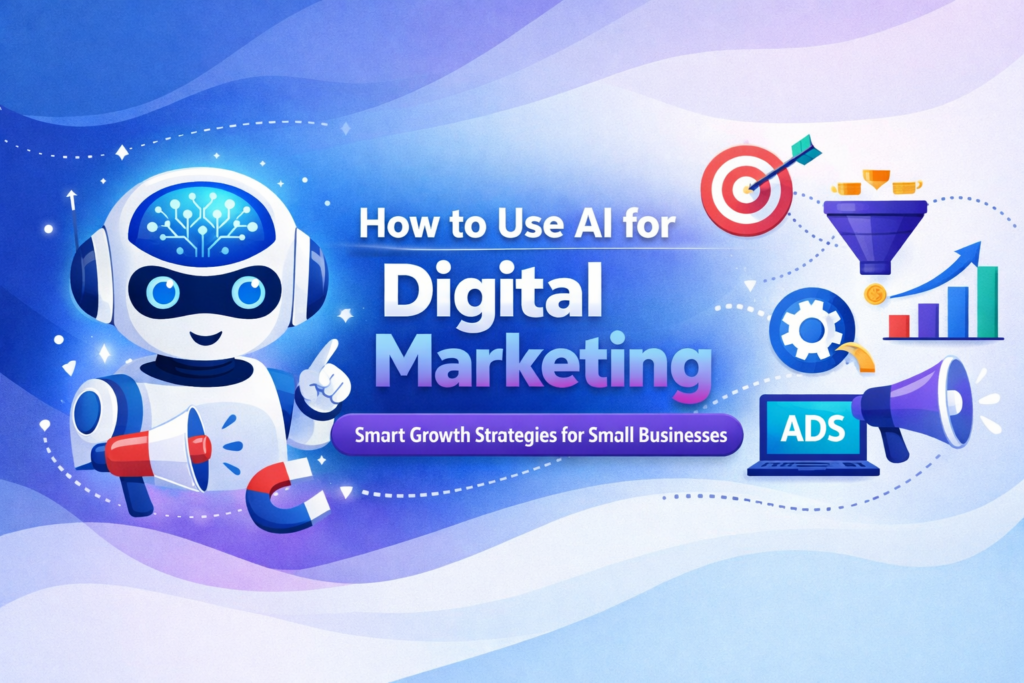

AI for digital marketing for small business is no longer a luxury reserved for companies with deep pockets and dedicated marketing teams. Let’s be honest — for years, the digital space felt like an uneven playing field, tilted heavily in favor of big brands. But in 2026, that gap has closed dramatically. Artificial intelligence has quietly become every small business owner’s secret weapon, and the best part? You don’t need a computer science degree or a six-figure budget to benefit from it. Whether you’re a solo entrepreneur, a local shop owner, or a growing startup, understanding the benefits of AI in content marketing and beyond can completely transform how you reach and convert customers.
Why AI in Digital Marketing Is a Game-Changer
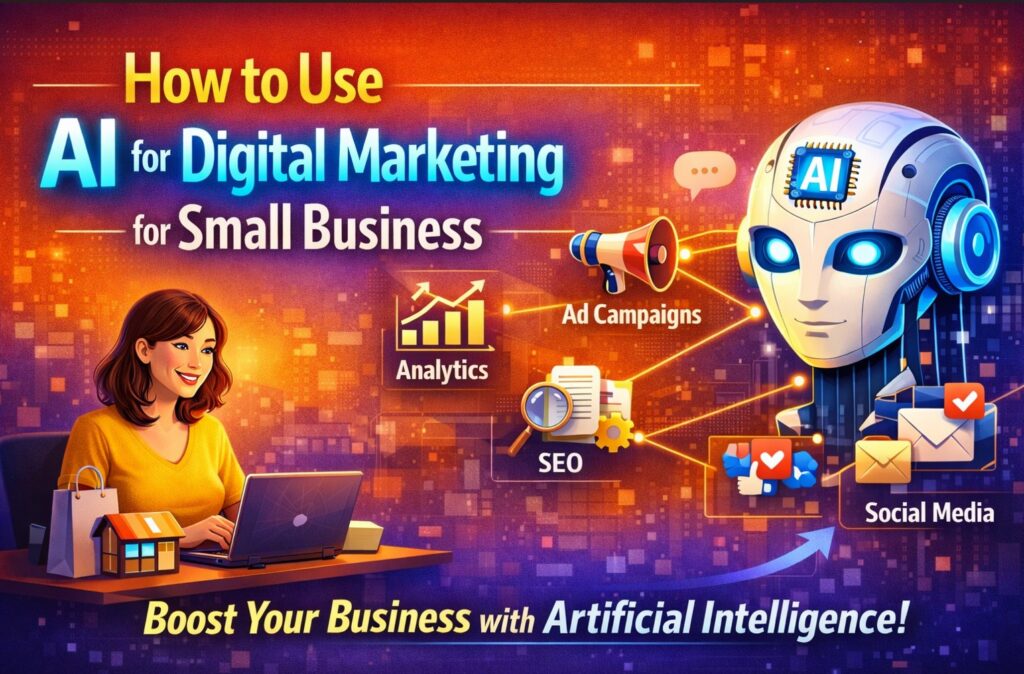
The rise of AI in digital marketing isn’t just a trend — it’s a fundamental shift in how businesses of all sizes operate online. AI can now write ad copy, personalize email campaigns, analyze customer data, schedule social media posts, and even predict which leads are most likely to convert. Tasks that once took hours now take minutes.
For small businesses especially, the benefits of AI in content marketing are staggering. Instead of hiring a full-time content team, a single business owner can now use AI to generate blog drafts, repurpose content across platforms, and tailor messaging to specific audience segments — all in the same afternoon.
AI Tools for Digital Marketing Beginners: Where to Start
If you’re new to this space, the number of AI tools available can feel overwhelming. Here’s the good news: you don’t have to use all of them. Start with one or two that directly solve your biggest pain points. Here are the most beginner-friendly categories:
- Content Creation: Tools like ChatGPT, Jasper, and Copy.ai help you draft blog posts, product descriptions, and social captions in minutes.
- Email Marketing: Platforms like Mailchimp and Klaviyo now use AI to optimize send times, personalize subject lines, and segment audiences automatically.
- Social Media Management: Tools like Buffer and Hootsuite use AI to recommend the best posting times and even suggest content based on trending topics.
- SEO Optimization: Tools like Surfer SEO and Semrush show you exactly how AI improves SEO strategy by analyzing top-ranking content and giving you actionable recommendations.
- Ad Management: Google Ads and Meta Ads now use machine learning to automatically adjust bids, targeting, and creatives to maximize your ROI.
How AI Improves SEO Strategy (And Why It Matters)
Search engine optimization has always been the backbone of digital visibility — but it’s also been one of the most time-consuming aspects of online marketing. Understanding how AI improves SEO strategy can save you dozens of hours every month.
AI-powered SEO tools analyze thousands of data points in seconds — from keyword difficulty and competitor backlinks to content gaps and user intent signals. They can tell you not just what keywords to target, but how to structure your content, what questions your audience is asking, and what type of content (video, list, long-form guide) tends to rank best for any given topic. For example, instead of spending hours guessing what your audience wants, an AI SEO tool can generate a complete content brief — complete with target keywords, suggested headings, internal link recommendations, and ideal word count — in under five minutes. That’s not just a time-saver; it’s a competitive advantage.
How to Use AI for Digital Marketing for Small Business: Automate More, Work Less
One of the most powerful advantages of AI is automation — and AI marketing automation for small business owners is where the real time savings stack up. Imagine waking up to find your email campaigns have already been sent to the right segments at the optimal time, your social posts have been published, and your ad bids have been automatically adjusted to maximize clicks within your budget.
Marketing automation powered by AI can handle lead nurturing sequences, re-engagement campaigns, cart abandonment emails, and customer loyalty programs — all without manual intervention. Platforms like HubSpot, Active Campaign, and even free tools like Mailchimp’s AI features make this accessible even for businesses just starting out.
The key is to set it up once, let it learn from your audience’s behavior, and then refine based on the data it collects. Over time, your automated campaigns become smarter and more personalized — driving higher open rates, click-through rates, and ultimately more sales.
AI Digital Marketing Strategy: A Step-by-Step Approach
Ready to build your own AI digital marketing strategy step by step? Here’s a simple framework to follow:
- Step 1 — Audit Your Current Marketing: Identify which tasks take the most time and deliver the least ROI. These are your prime candidates for AI automation.
- Step 2 — Pick One Tool and Master It: Don’t try to implement 10 AI tools at once. Start with one — ideally in the area where you feel the most pain (content, SEO, email, or ads).
- Step 3 — Feed It Good Data: AI is only as smart as the data you give it. Make sure your customer data, CRM, and website analytics are set up correctly.
- Step 4 — Test, Measure, Optimize: Run A/B tests on AI-generated content versus your existing content. Track conversion rates, engagement, and revenue impact.
- Step 5 — Scale Gradually: Once you see results in one area, expand AI usage into other parts of your marketing funnel. Build confidence before committing to a full overhaul.
Real Benefits of AI in Content Marketing You’ll Notice Immediately
Still on the fence? Here are some tangible benefits of AI in content marketing that small business owners report seeing within the first 30–60 days of adoption:
- Faster content production — blog posts and social content that used to take half a day now take under an hour.
- More consistent brand voice — AI tools can be trained on your brand guidelines to produce on-brand content every time.
- Better audience targeting — AI analyzes behavioral data to help you reach the right people at the right moment.
- Reduced ad spend waste — machine learning optimizes your campaigns in real time, cutting spend on underperforming audiences.
- Higher conversion rates — personalized content and timing, powered by AI, consistently outperforms generic campaigns.
The Bottom Line: AI Is the Great Equalizer
Learning how to use AI for digital marketing as a small business doesn’t have to be complicated or expensive. The tools are more accessible than ever, the learning curve is far gentler than most people expect, and the payoff — in time saved, leads generated, and revenue earned — is very real.
From AI tools for digital marketing beginners to advanced AI marketing automation for small business, 2026 is the year that levels the playing field. Big brands no longer have a monopoly on smart marketing. With the right tools and a solid AI digital marketing strategy, your small business can compete — and win — against players ten times your size.
So don’t wait. Pick one tool, take one step, and start building the smarter, more efficient marketing engine your business deserves.
AI doesn’t have to come with a hefty price tag. In fact, Google has quietly released a free tool that’s reshaping how marketers approach content and campaigns. Learn more in our article on Google Pomelli: A Game-Changing Free AI Tool for Marketers.


Pingback: Warning: Anthropic Claude for Small Business Is the AI Edge You're Missing